- +8618937185591
- +8618937185591
- ec19@zkcorp.com
- +8618937185591


Kaolin processing is divided into dry and wet method processes.
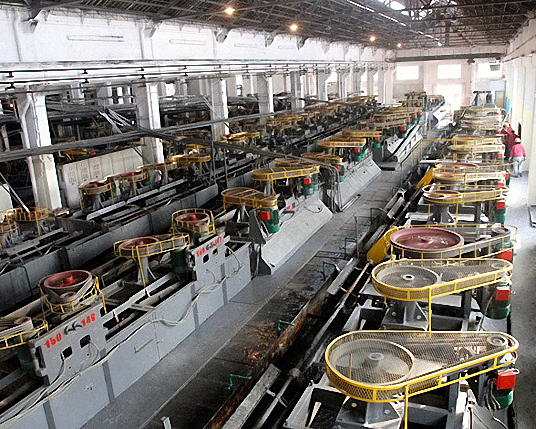
Kaolin processing is divided into dry and wet method processes.
The dry method is generally to crush themined ore to about 25 mm through a crusher and feed it into a cage crusher to reduce the particle size to about 6 mm. The hot air blown into the cage crusherreduces the water content of kaolin from about 20% to about 10%. The crushedore is further ground by an air-blown Raymond mill equipped with a centrifugalseparator and a cyclone dust collector. This process can remove most of thesand and is suitable for the processing of those ores with high whiteness, low gravelcontent and suitable particle size distribution. Dry process production costsare low, and products are often used for low-cost fillers in industries such asrubber, plastics, and papermaking
Wet processing includes several stages suchas dispersion, grading, impurity sorting, and product handling. Generalprinciples the process is: ore → crush → pulp → sand removal → cyclone classification → stripping → centrifugeclassification → magnetic separation (or bleaching) → concentration → pressurefiltration → drying → ceramic grade or paper coating grade products.
The general principles for the processingof coal (hard) kaolin are: raw ore → crushing → slush → cyclonegrading → stripping → centrifugal grading → concentration → pressure filtration → internal steam drying → calcination →depolymerization → filler grade or paper coating Kaolin.
The potential output value of mineralresources is also based on the asset value of mineral resources, but it isbased on the calculation of recoverable proved reserves, which is more refinedthan the total potential value of mineral resources. For a proven ore body, notall proved reserves can be mined under the existing technical conditions, andtechnically feasible and safe, based on technical parameters such as minimumrecoverable thickness, minimum industrial grade and related economicindicators. Reliable, economically reasonable to delineate those areas that arerecoverable, and use potential reserves for those recoverable reserves.
Fast, professional and reliablewe provide you with services throughout the product ...

Email
ec19@zkcorp.com

Whatsapp
+8618937185591
Fast, professional and reliablewe provide you with services throughout the product . you with services t