- +8618937185591
- +8618937185591
- ec19@zkcorp.com
- +8618937185591


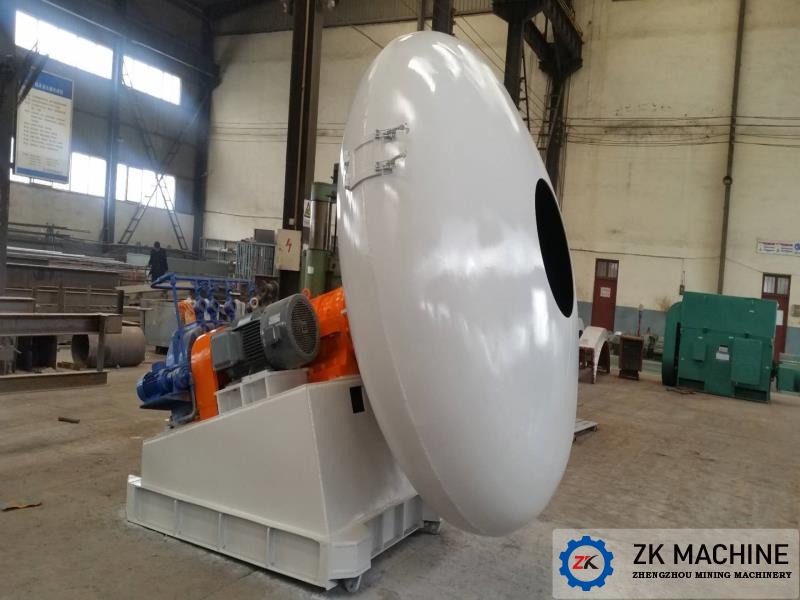
ZKL Series Pot Granulator is a commonly used equipment for rolling granulation of materials. With bauxite, shale, clay, sludge, fly ash, slag and other materials as raw materials, it can produce materials with a particle size of less than 5mm (such as ceramsite sand), and is widely used in construction, refractory insulation, oil fracturing proppant and other fields, suitable for granulation of fine powder materials.
The equipment is mainly composed of a variable frequency motor, reducer, bridge device, discharge door, granulating pot, slewing bearing device, scraper device and frame. It adopts a fixed inclination angle design, with a maximum of 4 discharge ports arranged on the pot body, featuring a compact structure and convenient control. Its working principle is as follows: the transmission device drives the cylinder to rotate through the bridge. When the materials roll in the pot, water drops are sprayed. After adsorption and wetting, the particles form a water film and continuously absorb materials. Through repeated rolling and compaction, qualified green pellets are finally discharged from the discharge door.
This series of granulators has significant advantages:
1. High pelletizing rate, uniform particle size and good strength;
2. Variable frequency speed regulation design, which can adjust the speed on demand;
3. Integrated base, ensuring stable operation and low noise;
4. Few failures, high efficiency, long service life, low energy consumption and easy particle size control.
Notes for operation: After starting the machine, add materials first and then water, and follow the principle of "frequent observation, frequent feeding and frequent adjustment". Adjust the moisture content, rotation speed and rotation time according to the material conditions.
The equipment covers 8 models, with a pot diameter of 2.2m-4.2m, a rotation speed of 14-24r/min, a supporting motor power of 15kw-132kw, and a production capacity of 1t-18t/h.
Key points for selection: Material name and composition, material characteristics (feeding particle size, moisture content, etc.), discharge requirements (particle size, strength, moisture content, etc.), and actual production capacity requirements.
Fast, professional and reliablewe provide you with services throughout the product ...

Email
ec19@zkcorp.com

Whatsapp
+8618937185591
Fast, professional and reliablewe provide you with services throughout the product . you with services t