- +8618937185591
- +8618937185591
- ec19@zkcorp.com
- +8618937185591

【Capacity】:
50~1200TPD【Main Materials】:
By calcining industrial residues, specifically sugar/beet plant waste and papermaking white mud【Main Equipment】:
lime rotary kiln, rotary dryer rotary cooler, jaw crusher, bucket elevator, etc.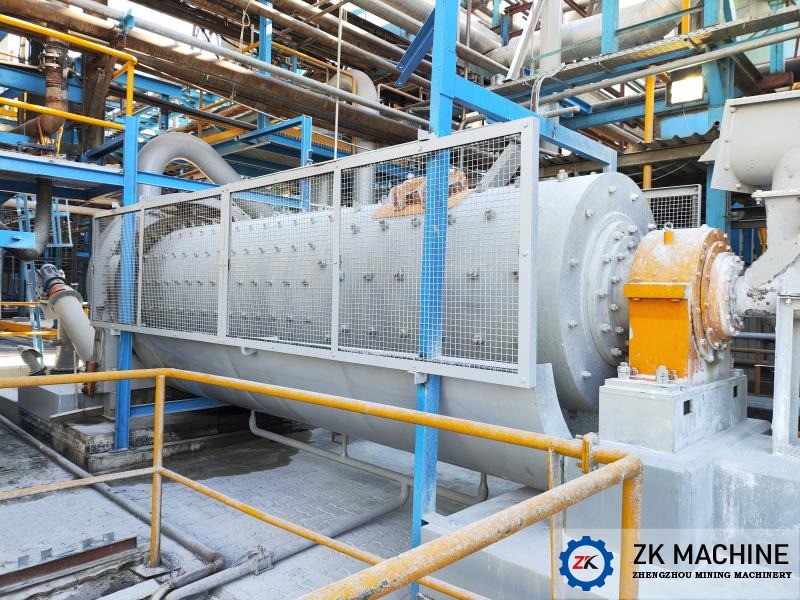
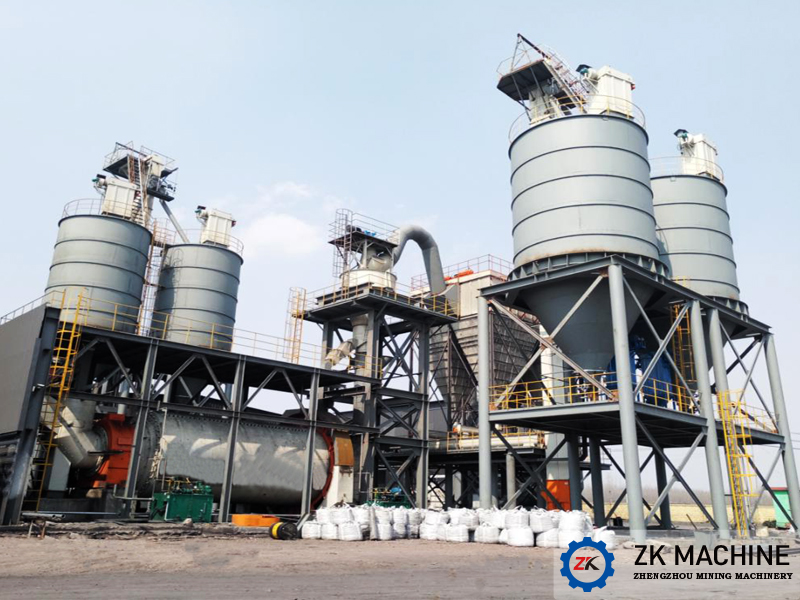
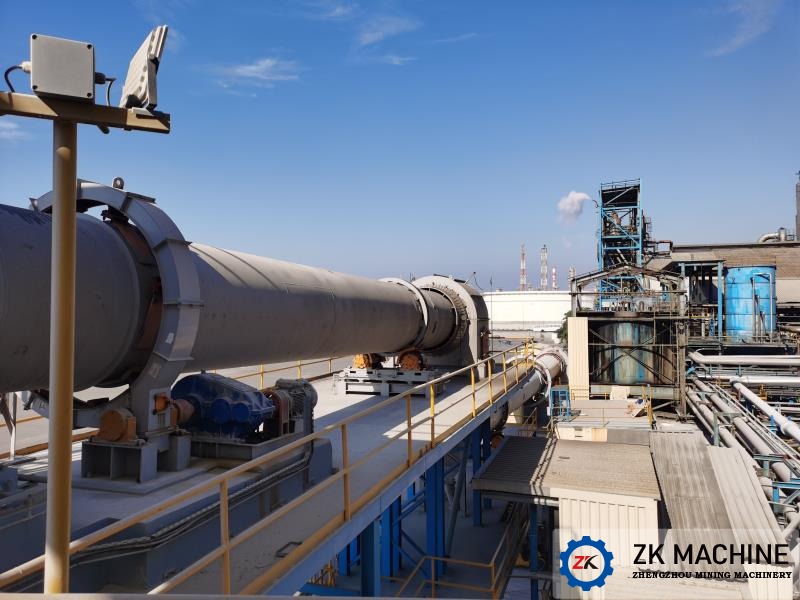
As a professional lime solution provide, ZK has developed an innovative and sustainable solution for producing high-quality lime by calcining industrial residues, specifically sugar/beet plant waste and papermaking white mud. Moving beyond traditional limestone-based production, this system embodies the principles of a circular economy by converting challenging waste streams—characterized by high moisture and viscosity—into valuable industrial products (lime and CO₂). The core design philosophy fully integrates energy conservation, environmental protection, and resource reuse. A successful reference plant is already operational in the UAE, validating the technology's commercial and technical feasibility.
1. Material Preparation & Drying: Sugar residue (30-40% moisture) is fed via a specialized box feeder to a metering belt conveyor. A shaftless screw conveyor, ideal for viscous materials, then transfers it to a rotary dryer. Here, a built-in chain device breaks up clumps to prevent wall adhesion and enhance heat exchange. Crucially, the dryer utilizes hot flue gas from the kiln tail, recovering waste heat.
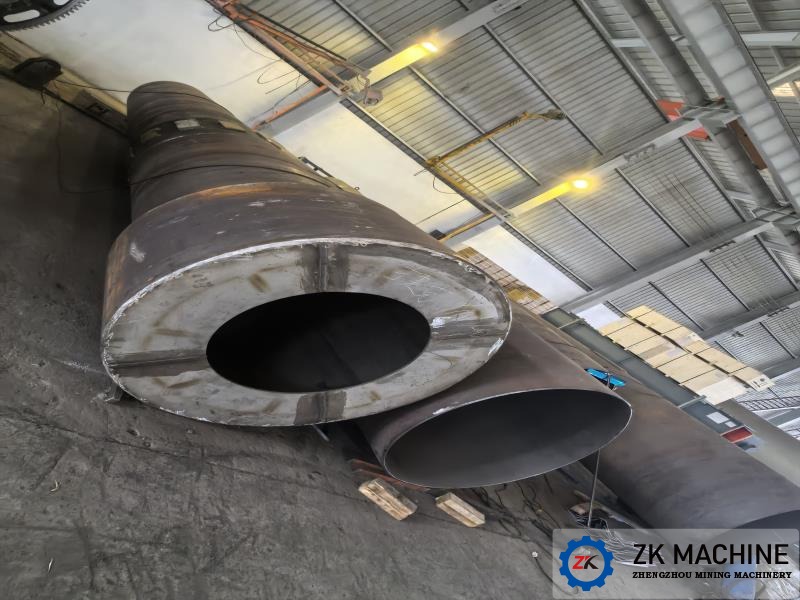
2. Calcination & Cooling: The dried material enters the rotary kiln, where a burner system maintains a calcination temperature of approximately 1250°C, ensuring complete conversion to lime (CaO). The hot lime discharges into a single-cylinder cooler. Ambient air cools the lime down to approximately ambient temperature +50°C, and this pre-heated air is then recycled as combustion support air back into the kiln, significantly improving thermal efficiency.
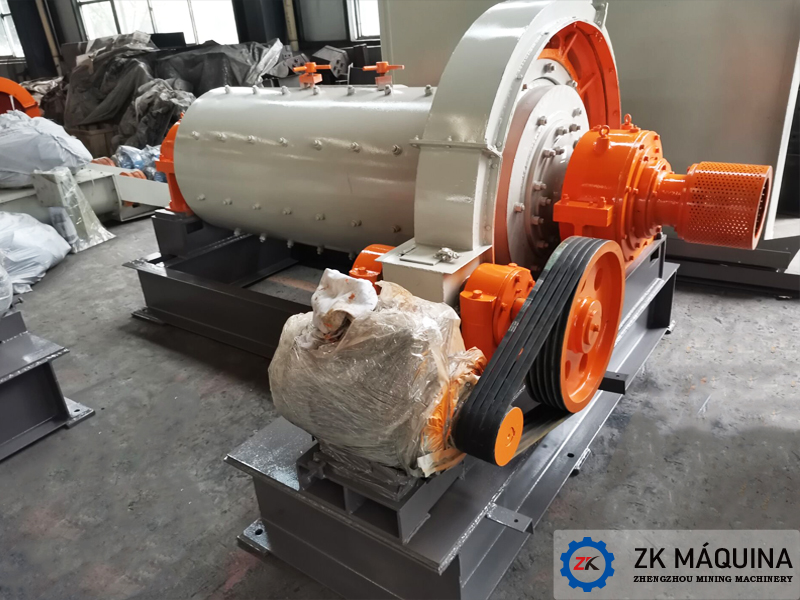
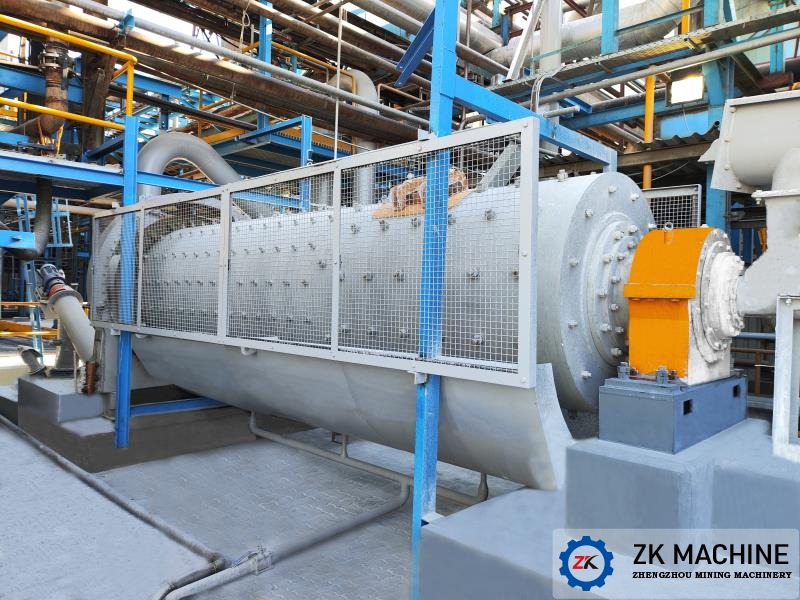
3. Finishing & By-Product Recovery: The cooled lime is ground into powder in a ball mill. The flue gas treatment system is integral to the project's environmental and circular design: kiln exhaust first passes through a cyclone dust collector, then a heat exchanger, and finally a CO₂ collection unit. The captured CO₂ is intended for reuse in sugar production. Similarly, dust from the grinding system, collected by a wet scrubber, can be hydrated into lime for reuse in the sugar plant.
| Capacity (t/d) | 150 | 200 | 250 | 300 | 350 | 400 | 500 | 600 | 800 | 1000 | 1200 |
|---|---|---|---|---|---|---|---|---|---|---|---|
| Main Equipment | Main supporting equipment models and technical and economic indicators | ||||||||||
| Vertical Preheater | YRQ04 | YRQ06 | YRQ06 | YRQ08 | YRQ08 | YRQ10 | YRQ12 | YRQ12 | YRQ14 | YRQ18 | YRQ20 |
| Rotary Kiln | φ2.5×40m | φ2.8×43m | φ3.0×48m | φ3.2×50m | φ3.3×52m | φ3.6×55m | φ3.8×58m | φ4.0×60m | φ4.3×65m | φ4.9×70m | φ5.1×72m |
| Vertical Cooler | LSF36 | LSF44 | LSF56 | LSF80 | LSF112 | ||||||
| Calcination Temperature /℃ | 1100±50 | ||||||||||
| Energy Consumption Index /(kCal/kg) | 1200±100 | ≤1150 | ≤1100 | ||||||||
| Power Consumption Index /(kW·h/t) | 40±5 | ||||||||||
| Limestone: Lime | 1.7~1.78:1 | ||||||||||
| Light and Over burnt Rate /% | ≤5 | ||||||||||
| Lime Activity /ml | ≥340(depends on the composition of limestone) | ||||||||||
| Lime Discharging Temperature /℃ | Ambient Temperature +60 | ||||||||||
| Limestone Feeding Size /mm | 10~20/20~40 | ||||||||||
| Emission Concentration /(mg/Nm3) | ≤10 | ||||||||||
| Annual Working Day / Days | ≥340 | ||||||||||
| Overhaul Cycle / Year | 1~3 | ||||||||||
| Labor / Shift | 2~3 | ||||||||||
| Applicable fuel | Coal powder, Coke oven gas, Semi-coke furnace gas, Converter gas, Blast furnace gas, Calcium carbide furnace gas, Natural gas, Diesel oil, Heavy oil, Liquefied petroleum gas, biomass fuel etc. | ||||||||||
Note: This configuration table is for reference only and varies according to project site conditions and customers requirements.
Fast, professional and reliablewe provide you with services throughout the product ...

Email
ec19@zkcorp.com

Whatsapp
+8618937185591
Fast, professional and reliablewe provide you with services throughout the product . you with services t