- +8618937185591
- +8618937185591
- ec19@zkcorp.com
- +8618937185591


3.1.1
3.1.1 Introduction to Process Flow
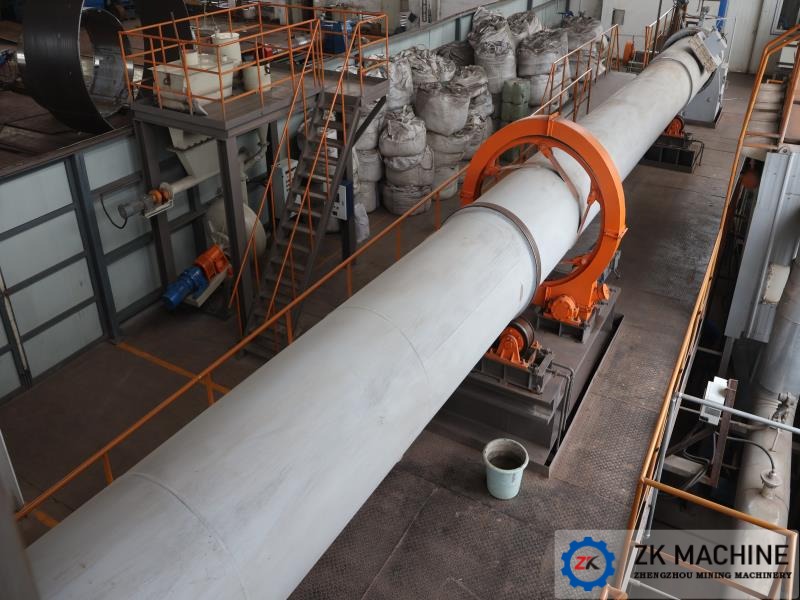
Kaolin is transported by a screw conveyor (1.09) to the kiln inlet feeding chute (2.01), and then passes through the kiln inlet chute (2.01) by gravity and enters the calcination kiln (2.02) along the way. As the kiln body rotates, it moves forward and undergoes a high-temperature calcination stage here, forming metakaolin powder or calcined kaolin powder.
The generated kaolin powder or calcined kaolin powder enters the rotary cooler (2.03) through the kiln outlet, and the cooling air enters from the discharge end of the rotary cooler (2.03) and exchanges heat with the material in reverse contact. The kaolin powder or calcined kaolin powder is cooled from 500-1100 ℃ to around 50-100 ℃ and discharged from the rotary cooler, and then sent to the silo by the bucket elevator (2.04).
The rotary kiln uses natural gas as fuel, and the external natural gas pressure of~15kPa is sent through pipelines to the natural gas valve group for regulation before entering the natural gas burner. The primary air required for the burner is supplied by a Roots blower, and the secondary air comes from the exhaust gas of the rotary cooler (2.03).
The exhaust gas generated by the calcination kiln (2.02) enters the flue gas treatment system for treatment.
A bag filter (2.07) is installed next to the silo for dust treatment in high-temperature resistant electronic belt weigher (3.07) and screw type bag packer (3.05) of the silo and grinding system. The treated dust containing gas is discharged through a fan (2.07-2).
Previous:none
Fast, professional and reliablewe provide you with services throughout the product ...

Email
ec19@zkcorp.com

Whatsapp
+8618937185591
Fast, professional and reliablewe provide you with services throughout the product . you with services t